
Easy Miso Soup Recipe – Quick & Delicious Flavor
Miso Soup Recipe: A comforting embrace in a bowl, our simple Miso Soup Recipe is more than just a starter; it’s an experience. For anyone who’s ever dipped a spoon into this deceptively simple yet profoundly satisfying broth, you know the magic. It’s that perfect balance of salty, umami-rich goodness that awakens the palate and soothes the soul. What makes this particular miso soup so special is its incredible versatility and the depth of flavor we achieve with just a few key ingredients. It’s the cornerstone of many Japanese meals, a warm welcome at the start of a feast, or a gentle companion to a quiet evening. This recipe demystifies the process, allowing you to recreate that authentic, soul-warming miso soup experience right in your own kitchen. Get ready to discover how easy it is to craft this beloved classic.
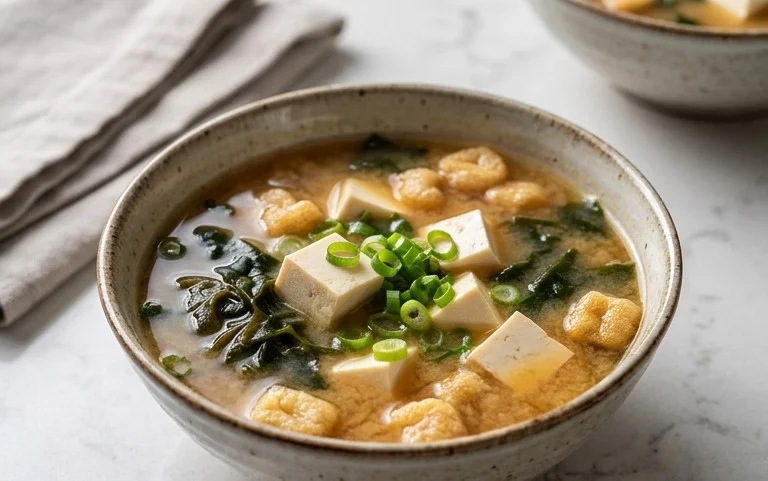
Miso Soup Recipe
Miso soup is a comforting and flavorful Japanese staple that’s surprisingly easy to make at home. It’s more than just a side dish; it’s a bowl of warmth and umami that can be enjoyed any time of day. The beauty of miso soup lies in its simplicity and its ability to be customized to your liking. At its heart, it’s a broth infused with the savory depth of miso paste, enriched with dashi, and often featuring delicate additions like tofu and seaweed. This recipe will guide you through creating a classic, satisfying bowl of miso soup that you can proudly serve to your family and friends. Let’s get started on this delightful culinary journey.
Ingredients:
Preparing Your Miso Soup
The process of making miso soup is straightforward, focusing on gentle simmering to preserve the delicate flavors. We’ll start by rehydrating our seaweed and then building the broth.
Step 1: Rehydrate the Seaweed
The first step is to prepare your dried seaweed. Most recipes call for dried wakame, which expands beautifully in water. Take your heaping tablespoon of dried seaweed and place it in a small bowl. Add about ½ cup of lukewarm water to the bowl. Let the seaweed soak for about 5 to 10 minutes. You’ll notice it transforming from brittle flakes into tender, emerald-green strands. Once rehydrated, drain off any excess water and set the seaweed aside. If the strands are very long, you can give them a quick chop with scissors to make them more manageable to eat in the soup. This simple step ensures the seaweed is pleasant to chew and distributes its oceanic flavor evenly throughout the soup.
Step 2: Heat the Dashi Broth
Now, it’s time to get our base broth ready. Pour the 2½ cups of dashi into a medium saucepan. Place the saucepan over medium heat. We want to bring the dashi to a gentle simmer. It’s important not to boil the dashi vigorously, as this can sometimes diminish its subtle, savory notes. You’ll see small bubbles forming around the edges of the pot and a gentle steam rising. This warm, inviting base is where all the deliciousness will unfold. While the dashi heats, you can prepare your tofu.
Step 3: Add Tofu and Seaweed
Once the dashi is warm and starting to show signs of a simmer, it’s time to add the other key components. Gently add the silken tofu, which you should have already cut into small, bite-sized pieces. Be careful not to break them up too much as you add them; they are delicate. Next, add the rehydrated seaweed to the pot. Stir gently to distribute them evenly within the warm broth. Allow these ingredients to heat through for about 2 to 3 minutes. The tofu will become tender, and the seaweed will meld into the broth, infusing it with its character.
Step 4: Dissolve the Miso Paste
This is arguably the most crucial step in making miso soup. Miso paste is a fermented soybean product, and boiling it can destroy its beneficial probiotics and alter its delicate flavor. Therefore, we never boil the miso directly in the soup. Instead, we temper it. Ladle about ½ cup of the warm dashi broth from the saucepan into a separate small bowl. Add your 2-2½ tablespoons of miso paste to this bowl. Using a whisk or a fork, vigorously stir the miso paste into the warm broth until it is completely dissolved and smooth. This creates a concentrated miso liquid that will then be incorporated back into the main pot. The amount of miso paste can be adjusted based on your personal preference for saltiness and intensity of flavor. Start with 2 tablespoons and add more if you desire a stronger taste.
Step 5: Combine and Serve
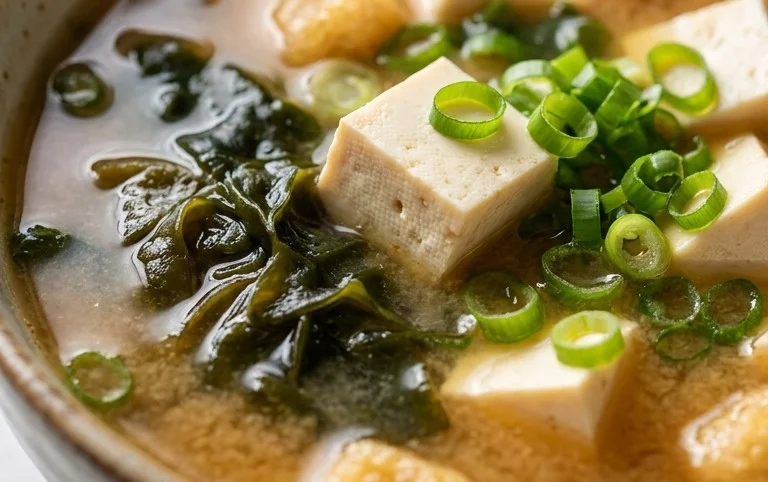
Once the miso paste is fully dissolved in the small bowl, carefully pour this mixture back into the main saucepan with the dashi, tofu, and seaweed. Stir gently to combine everything. Now, continue to heat the soup over low heat, but do not let it boil. You want the soup to be hot and steaming, but just below a boil. This gentle warming allows the miso to fully integrate its flavor into the broth without compromising its integrity. Simmer for another minute or two to ensure everything is heated through. Ladle the hot miso soup into your serving bowls. Garnish generously with the chopped scallions, which add a fresh, pungent bite. Serve immediately and enjoy the comforting, savory goodness of your homemade miso soup! It’s the perfect accompaniment to any Japanese meal or can be enjoyed as a light and nourishing snack.
Conclusion:
And there you have it – a simple yet deeply satisfying Miso Soup Recipe that’s perfect for any occasion! This recipe is fantastic because it’s incredibly quick to prepare, using minimal ingredients to achieve a rich, umami-packed flavor that warms you from the inside out. It’s the ultimate comfort food, whether you’re starting your day, enjoying a light lunch, or winding down in the evening. Don’t hesitate to experiment with the additions to make it your own; the possibilities are endless and delicious!
I highly encourage you to give this Miso Soup Recipe a try. It’s a gateway to a whole world of Japanese cuisine and a wonderful way to incorporate beneficial ingredients into your diet. Serve it as a starter with your favorite sushi or teriyaki dishes, or enjoy it as a standalone meal with some extra protein and vegetables.
For variations, consider adding silken tofu cubes for extra protein, some sliced shiitake mushrooms for an earthy depth, or even a sprinkle of toasted sesame seeds for added crunch and nutty flavor. A dash of chili oil can also provide a delightful spicy kick if you’re feeling adventurous!
Frequently Asked Questions about Miso Soup:
Can I make miso soup ahead of time?
While miso soup is best enjoyed fresh, you can prepare the dashi broth and other ingredients (like tofu and vegetables) ahead of time and store them separately in the refrigerator. Add the miso paste and any delicate greens just before serving to maintain their flavor and texture.
What kind of miso paste should I use?
The type of miso paste you choose will significantly impact the flavor. White miso (shiro miso) is milder and slightly sweet, perfect for a delicate soup. Red miso (aka miso) is more robust and salty, offering a deeper umami flavor. A blend of both can create a beautifully balanced taste. Experiment to find your favorite!
Can I add other vegetables to my miso soup?
Absolutely! Miso soup is incredibly versatile. Feel free to add thinly sliced carrots, bok choy, spinach, napa cabbage, or even edamame. Just remember to cook harder vegetables first, and add softer greens towards the end of the cooking time.
Miso Soup
A simple and flavorful classic Japanese miso soup.
Ingredients
-
2½ cups Dashi
-
1 heaping tablespoon dried seaweed
-
4 oz silken tofu, cut into small pieces
-
2-2½ tablespoons miso paste, or to taste
-
1 tablespoon scallion, chopped
Instructions
-
Step 1
Rehydrate the dried seaweed in a small bowl of water for 5-10 minutes, then drain. -
Step 2
In a medium saucepan, gently heat the Dashi over medium heat. Do not boil. -
Step 3
Add the rehydrated seaweed and silken tofu to the saucepan. -
Step 4
In a separate small bowl, whisk the miso paste with a ladleful of warm Dashi until smooth. -
Step 5
Pour the dissolved miso mixture into the saucepan. Stir gently to combine. -
Step 6
Heat the soup gently for another minute or two, ensuring it does not boil, as this can diminish the miso flavor. -
Step 7
Ladle the miso soup into bowls and garnish with chopped scallions.
Important Information
Nutrition Facts (Per Serving)
It is important to consider this information as approximate and not to use it as definitive health advice.
Allergy Information
Please check ingredients for potential allergens and consult a health professional if in doubt.